 0
0
 0
0
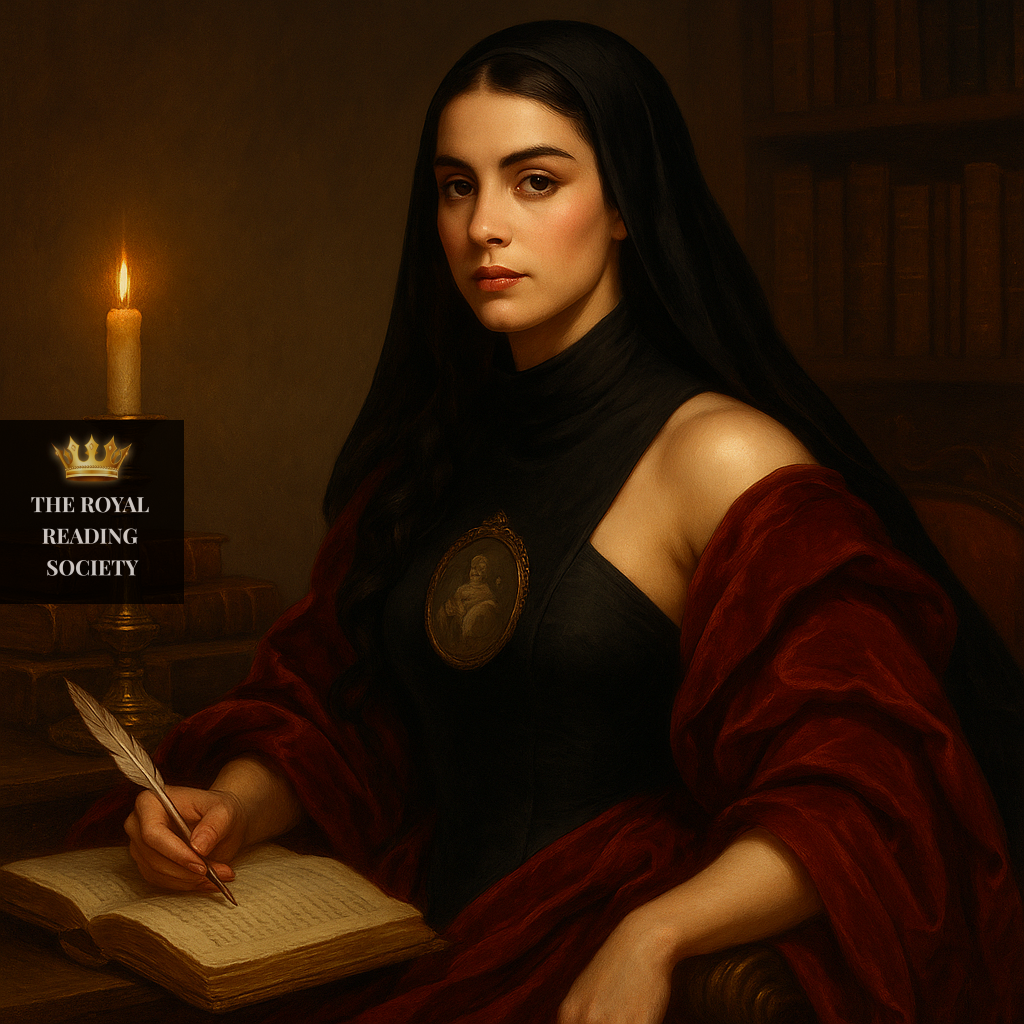
Ah—a tale of veils, volumes, and virtuosity cloaked in conventual calm? One scarcely dares breathe too loudly in the presence of a woman such as Sor Juana Inés de la Cruz—née Juana Ramírez de Asbaje—lest her quill, sharper than any sword of court or clergy, eviscerate one’s ignorance with a flick of ink.
And yet… history, with its curious fondness for male minds and misremembered morality, has oft dared to whisper of her as “the worst nun.”
Shall we then reframe her infamy as intrigue? Her rebellion as renaissance? Let us lace our gloves, steady our fans, and march boldly into scandalous enlightenment, for—
In Candles, Quills, and Querellas: The Chronicles of the Cloistered Conjuror
Dear Reader,
What is virtue but a corset too tightly bound? And what is vice but the daring to loosen it in search of breath?
If ever there lived a woman whose intellect outshone her piety—whose chastity, though vowed, was rather to books than bishops—it is she whom this paper is audacious enough to revive: Doña Juana Ramírez de Asbaje, later cloistered as Sor Juana Inés de la Cruz.
A divine paradox draped in habit and ink, she hath been branded “the worst nun in history” by tongues too timid to grapple with genius. But I, dear reader, shall tell you otherwise. Or rather—I shall tell you everything.
It began not in scandal, but in silence…
A girl-child in the New Spain hinterlands—curious, ravenous for knowledge, and altogether allergic to obedience. She taught herself Latin in secret. Greek by moonlight. Mathematics beneath her mattress. For every banned book, she memorised two. A precocious pupil of no formal school, she soon discovered that men—be they friars or fops—admired clever women only when they played dumb.
So she did the unthinkable: she chose the convent.
But not for prayer.
Oh no.
The Convent of San Jerónimo—Where Ink Was Holier Than Incense
Rather than kneel, she wrote. Rather than obey, she argued. The abbey, that sacred citadel of submission, became her salon, her study, her sanctuary.
She penned plays where women bested men—not with bosoms, but with brains.
She composed philosophical treatises that might’ve caused Aristotle himself to perspire.
And when the Bishop of Puebla dared scold her for her secular studies—publishing under a pseudonym, no less!—she replied with a rhetorical thunderclap that would shake every library from Lisbon to Lima.
“Who hath granted men the monopoly of wisdom?” she inquired, in prose so polished it might’ve cut glass.
A Cloistered Court, a Papery Parliament
Though her vows demanded silence, Sor Juana was anything but mute.
Her convent cell became the epicentre of New Spain’s literary lustre. Vicereines sent her jewels in exchange for verses. Poets from the court sought her critiques like courtiers begging favour. Even bishops wrote beneath pseudonyms to debate her.
One wonders—was her habit a disguise, a defence, or a dare?
Let it be said plainly: if she was a nun, she was a nun only in the way a lion might wear a ribbon and call itself domesticated.
The Scandal That Was Never a Sin
What, then, of her so-called sins?
That she dared question theology?
That she wrote poems to noblewomen so tender and breathless they might cause a bishop to blush?
That she refused to marry, not because she loved no man, but because she loved freedom more?
Indeed—let it be etched upon the very brass of history—Sor Juana’s greatest transgression was that she refused to be less.
But What Becomes of a Fire When the Church Demands Ashes?
Alas. Rome turned its gaze. The Inquisition loomed. Friends withdrew. Books were burned.
And so, our darling dissenter laid down her quill.
She renounced study. She sold her library. She signed declarations of penitence in her own blood.
Yes, her own blood.
Even so, some say she continued to write in secret. A psalm here. A sonnet tucked into a sister’s hymnal. A dangerous thing, Reader, to demand silence from a voice so divinely loud.
Her Final Act: Martyrdom of the Mind
She perished not from plague, but from devotion—nursing her fellow sisters during an epidemic that spared not even those deemed saints.
Her intellect could withstand popes and princes. But not pestilence.
And yet—though her body rests beneath the convent stones, her words have never ceased to flutter in scandalous perpetuity.
Dear Reader, Consider:
Was she truly the “worst” nun? Or was she simply a woman who refused to confess to mediocrity?
Even now, her ghost is said to linger—not haunting in sorrow, but smirking in triumph.
Should you ever pass a library in candlelight and hear the rustle of pages without a hand to turn them, pay no mind.
It is only Sor Juana—reading what the Church tried to ban, and laughing at men who thought her prayers must rhyme with obedience.
Yours Truly,
Lady Wᴴ—
Who finds saints far duller than scandalous scholars
Next Week’s Teaser:

Discover more from THE ROYAL READING SOCIETY
Subscribe to get the latest posts sent to your email.